The role of large-scale image datasets in training multimodal AI models
Multimodal AI integrates text, images, and audio into models with a more complete understanding of the world. Large-scale image datasets are what let those models learn visual representations and align them with everything else.
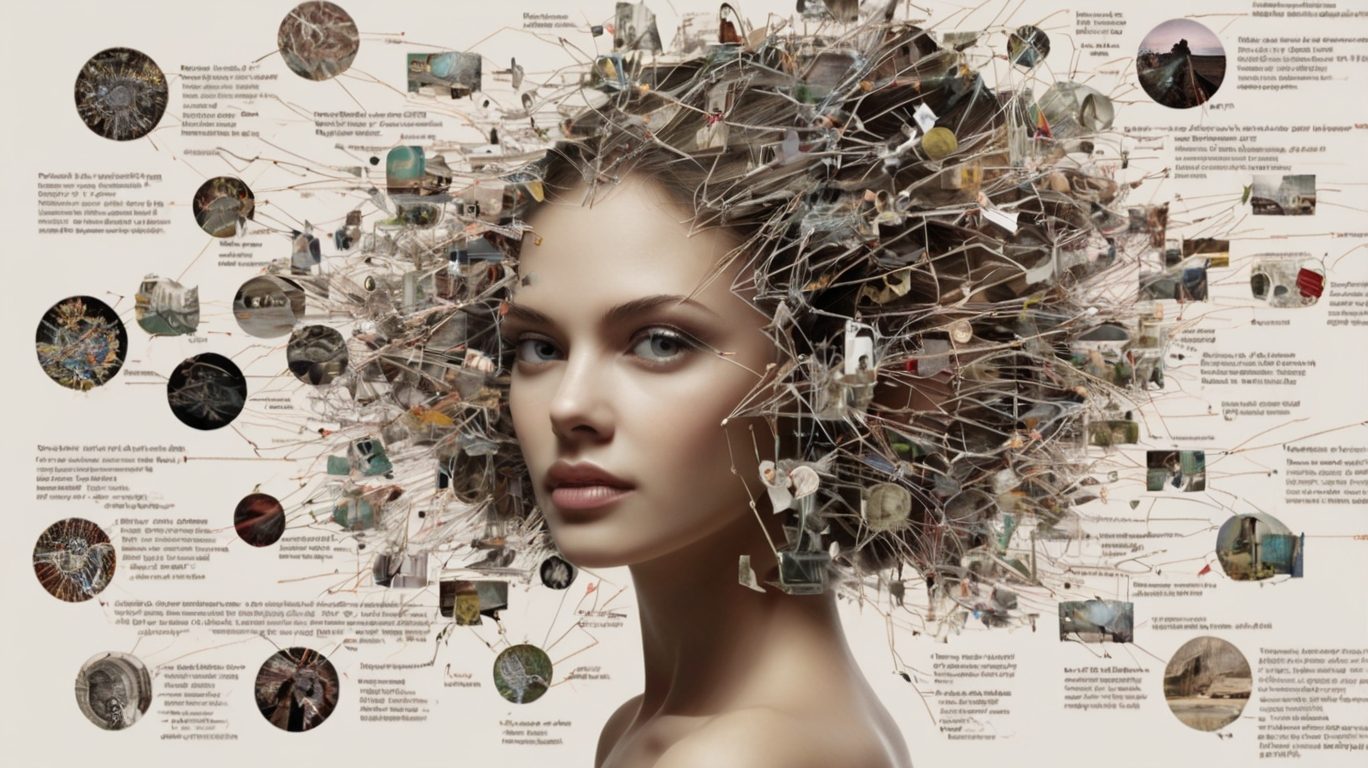
Multimodal artificial intelligence has emerged as a transformative approach to machine learning, integrating multiple types of data - text, images, and audio - to create models with a more comprehensive understanding of the world. These systems are foundational to recent advances in generative AI, autonomous systems, and human-computer interaction (Radford et al., 2021). Large-scale image datasets play a crucial role in their development, enabling models to learn complex visual representations and align them with other modalities. With vast and diverse image corpora, multimodal models reach higher levels of generalization, accuracy, and contextual understanding.
The significance of large-scale image data can be understood through four aspects: data diversity and quality, cross-modal alignment, computational challenges, and ethical considerations. Together they explain why high-quality, rights-cleared image datasets are essential for the next generation of AI systems.
Data diversity and quality in multimodal learning
One of the most critical factors in training multimodal models is data diversity. Large-scale image datasets such as ImageNet (Deng et al., 2009), Microsoft's COCO (Lin et al., 2014), and LAION-5B (Schuhmann et al., 2022) span objects, scenes, lighting conditions, and cultural contexts. Diversity lets models learn robust representations that generalize beyond the training set; a model trained on a narrow dataset struggles with real-world variability and inherits bias.
Data diversity is essential because it allows AI models to learn robust representations that generalize well beyond their training set.
Quality matters as much as breadth. High-resolution, photographer-grade, well-annotated, accurately labeled images sharpen feature extraction and semantic alignment. Datasets that include extensive metadata - descriptions, EXIF data, object tags, spatial relationships - strengthen the model's ability to correlate visual information with text or audio.
Cross-modal alignment and representation learning
Multimodal models rely on large-scale image data to establish meaningful relationships between different kinds of input. Vision-language models like CLIP show how massive image-text datasets let a system develop a shared representation space between images and their descriptions, which is what makes zero-shot recognition possible.
Cross-modal alignment maps features from different modalities into a common embedding space where their semantic relationships can be learned. It matters most for generative models such as DALL·E (Ramesh et al., 2021), where the quality and scale of image data directly set the fidelity of the output and the model's grasp of nuanced prompts. Multimodal contrastive learning - training models to associate paired image-text representations while separating unrelated pairs - needs vast image data to capture the richness of visual and linguistic association.
Computational challenges and optimization
Training on billions of images demands extensive compute, parallel processing, and efficient data pipelines - the high-performance clusters and distributed frameworks behind GPT-4 and PaLM (Brown et al., 2020; Chowdhery et al., 2022).
Curation and augmentation strategies decide training efficiency. Self-supervised learning (He et al., 2019) lets models learn from unlabeled images and reduces the dependence on manual annotation; active learning prioritizes the most informative samples (Sener and Savarese, 2018). Image data is also inherently high-dimensional - unlike text, it cannot be tokenized into discrete units - and needs feature extractors such as CNNs and vision transformers (Dosovitskiy et al., 2021) whose integration with language models remains an active research area.
Ethical considerations and bias mitigation
Large-scale image datasets raise concerns about bias, privacy, and provenance. Widely used datasets carry inherent biases that propagate into models; some overrepresent certain demographics and underrepresent others, producing skewed predictions (Buolamwini and Gebru, 2018). Addressing this takes careful curation, fairness-aware training, and diverse sources.
Privacy concerns follow datasets sourced from the open internet, some of which contain images of individuals without consent. The research community answers with privacy-preserving techniques such as differential privacy (Dwork et al., 2006) and federated learning (McMahan et al., 2017).
Provenance and licensing are the third pillar. Organizations that build and distribute multimodal models must hold proper licenses and attribution, and datasets should document their sourcing so origins and usage rights are transparent. This is the standard DataSeeds.AI is built around: no scraped data, ever; consent at the source; a traceable rights record with every asset.
Future directions
The role of large-scale image data in multimodal learning will only expand. Research aims to train more efficiently on smaller, higher-quality datasets combined with transfer learning (Kolesnikov et al., 2020), while synthetic data generation offers controllable, diverse training sets (Nikolenko, 2021). Real-time multimodal inputs - video, images, audio - open the door to interactive assistants and autonomous robotics that learn dynamically from the world.
Ultimately, the success of multimodal generative AI depends on the quality, scale, and diversity of its training data. Human-annotated, rights-cleared image datasets like those DataSeeds.AI produces are a foundational component of that ecosystem, bridging visual perception and linguistic understanding.